
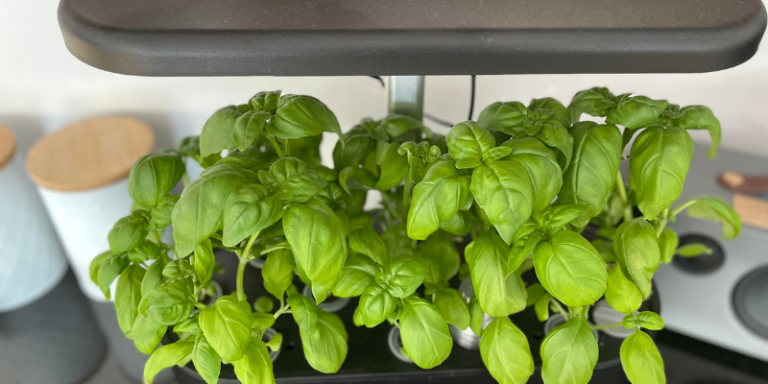
When the borders turn grey, and the herb beds fall silent, basil can make a cheerful return indoors from seed. A simple kitchen hydroponic tray – seed plugs, a small reservoir of nutrient solution, and bright light – is enough to bring this summer staple back into leaf during the darkest months. Warmth and steady moisture prompt quick germination, roots dangle cleanly in water, and within a few weeks, the seedlings unfurl glossy, aromatic foliage that smells unmistakably of summer.
Varieties and Cultivars
Most commonly available basil seeds can be grown successfully indoors. Genovese and Sweet Basil remain the stalwarts for Italian cooking, with broad leaves and dependable flavour. Thai Basil offers a firmer anise note and proves tolerant of drier indoor air. Lemon Basil is compact, citrus-scented, and adds a lift to fish dishes and salads.
Managing Light in Midwinter
Light is the critical factor for indoor basil. During summer, the plant receives long, bright days and converts that light into vigorous growth. Winter sunlight, by contrast, is both brief and weak, particularly in northern regions of the country.
Basil requires long photoperiods – 12 to 14 hours – to remain compact and productive. A bright, south-facing windowsill may suffice during fine spells, but most gardeners rely on LED grow lights for consistency. These fixtures are economical to run, emit minimal heat, and provide a spectrum well-suited to leafy growth. A simple timer removes guesswork and keeps day length uniform.
Plants that stretch towards the light or show elongated internodes are signalling inadequate illumination.
Countertop Hydroponic Units
Hydroponic countertop units, such as the Click and Grow Smart Garden, have become increasingly popular for winter herbs. They combine water, nutrients, and lighting in a compact footprint, allowing basil to grow steadily regardless of outdoor conditions.
An IDOO unit, or any broadly similar system, circulates nutrient solution around the roots and supplies overhead LED lighting, preventing the lax, pale growth typical of low-light windowsills. Maintenance is limited to topping up the reservoir, refreshing nutrients periodically, and keeping algae in check. The leaves produced are tender, aromatic, and uniform, and yields are respectable for such compact equipment.
Basil in Pots
Hydroponics is not essential. Basil can grow in pots of 10–15cm diameter filled with a free-draining multipurpose compost. As a Mediterranean herb, basil resists waterlogging; drainage holes and light compost are therefore essential.
Indoors, watering frequency reduces in winter. Heated rooms are dry, yet evaporation from compost slows under weak light. Water once or twice weekly as needed, allowing the surface to dry slightly between waterings. Pots are best positioned in the brightest available window, with supplementary light where necessary.
Temperature and Humidity
Basil thrives in warm conditions and tolerates the average home comfortably. Aim for 18–24°C (65–75°F) and avoid placing pots against cold panes or in draughts. Centrally heated rooms tend to be arid in winter; a tray of damp pebbles beneath the pots raises local humidity modestly and prevents the leaf edges from crisping.
Feeding and Harvesting
Indoor basil is best harvested continuously. Rather than removing long stems, pinch out the growing tips to encourage fresh branching and delay flowering. Hydroponic systems incorporate nutrients by design; pot-grown plants appreciate a dilute liquid fertiliser every fortnight.
Plants remain productive for several months before growth slows and stems become woody. At that stage, many gardeners prefer to sow anew or strike fresh cuttings.
Problems Encountered Indoors
Indoor basil encounters a handful of predictable difficulties, all of which are manageable:
• Soft, leggy stems indicate insufficient light.
• Yellowing leaves suggest waterlogging or low nutrients.
• Mildew forms in still, moist air; increase ventilation.
• Fungus gnats thrive in persistently damp compost; allow the surface to dry and use sticky traps.
• Algae in hydroponic reservoirs occurs where light penetrates; keep covers in place.
Provided light and moisture are managed sensibly, basil is remarkably forgiving.
Winter cooking with Basil
Fresh basil, including both the leaves and basil flowers, has a noticeable effect on winter cooking. Tomato soups brighten considerably with a scattering of sliced leaves. Thai basil deepens broths and curries. Lemon basil lifts grilled fish, pearl barley, and salads. Pesto, that summer staple, returns to the midweek table in January with little effort.
A quick note about basil flowers – if you do not use them in dishes, you can let them mature. The plant is now using all its energy to produce flower stalks that will produce vital basil seeds. Learn more here on how to plant basil seeds for the following season!
Our best homemade Pesto recipe using fresh Basil
If you love the flavour of fresh basil pesto but don’t love the cost of making it at home, this recipe is for you. Traditional pesto uses pine nuts, which can be pricey, so we’ve swapped them for sunflower seeds to keep things affordable without losing that classic, herby richness.
A splash of lemon juice lifts the basil beautifully, and you can choose a good neutral oil (or another favourite) rather than relying on olive oil.
Lemon-Sunflower Basil Pesto (Budget-Friendly, Bright, and Versatile)
Ingredients (makes about 1 cup)
- 2 packed cups fresh basil leaves (about 60–70 g)
- 1/3 cup sunflower seeds (or see swaps below)
- 1 small garlic clove (or 1/2 large), roughly chopped
- 1/2 cup finely grated Parmesan (or another aged hard cheese), plus more to taste
- 3 tablespoons fresh lemon juice (about 1 lemon)
- 1/2 teaspoon fine salt, plus more to taste
- 1/2 cup oil (see oil options below)
- Optional: 1–3 tablespoons cold water (to loosen, if needed)
- Optional: a pinch of black pepper or chilli flakes
Oil options (not necessarily olive oil)
- Neutral: rapeseed (canola), sunflower, grapeseed (clean flavour; basil and lemon shine)
- More character: avocado oil (mild), walnut oil (nutty), extra-virgin olive oil (classic, but optional)
Method
- Toast the seeds (worth it).
Heat a dry frying pan over a medium heat. Toast the sunflower seeds for 2–4 minutes, stirring often, until lightly golden and fragrant. Leave to cool for 5 minutes. - Blend the base.
Add the toasted seeds and garlic to a food processor and pulse until finely chopped. - Add basil, cheese, and lemon.
Add the basil, Parmesan, salt, and lemon juice. Pulse 8–12 times until the basil is shredded and bright green. - Stream in the oil.
With the processor running, drizzle in the oil until the pesto is thick but spoonable. If it seems too stiff, add 1–3 tablespoons cold water to loosen it without adding extra oil. - Taste and adjust.
Add a little more lemon juice for brightness, salt for balance, or cheese for body. Season with black pepper or chilli flakes if you like.
Budget-friendly nut/seed swaps
Use the same amount (1/3 cup) and toast if possible.
- Pumpkin seeds (pepitas): deeper, slightly earthy flavour
- Almonds (blanched or flaked): mild and “classic”
- Walnuts: more robust; lovely with a touch more lemon
- Cashews: extra creamy; you may want slightly less oil
How to use it
- Toss through pasta with a splash of pasta water to help it coat evenly
- Spread on sandwiches, wraps, or toast
- Stir into soups or beans just before serving
- Spoon over roasted veg, eggs, chicken, or fish
Storage (for best colour and freshness)
- Keep in the fridge for up to 5–6 days in a jar. Smooth the top and add a thin layer of oil to help prevent browning.
- Freeze in an ice cube tray, then transfer to a bag for up to 3 months. (For the freshest flavour, you can stir in the cheese after thawing, if you prefer.)
Winter need not mark the end of herb growing. With supplementary light and a little horticultural care, basil continues to perform indoors while the garden lies dormant. For many cooks, the steady supply of fresh leaves justifies the small investment in equipment or space. Winter offers an excellent opportunity to experiment with cultivars, refine indoor techniques, and enjoy the luxury of fresh herbs throughout the cold months.
