
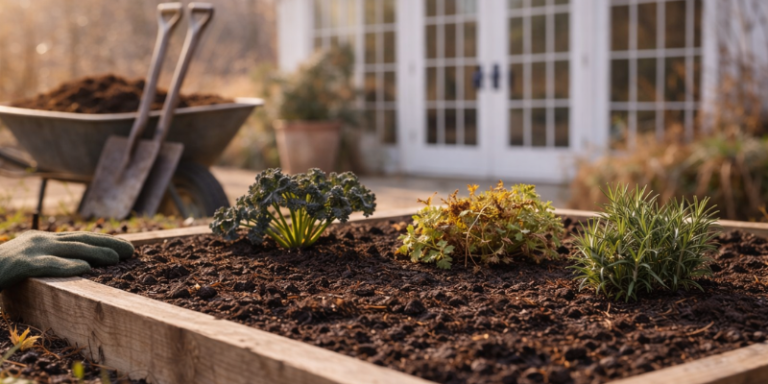
Winter can feel like a dead stop in the garden. The beds are quiet, the days are short, and any motivation to potter outside is hard to muster.
The good news is that winter is exactly when you can set yourself up for an easier, more productive spring.
Preparing veg and herb beds is all about a few practical, low-effort jobs that pay you back later with healthier plants, fewer pests, and less last-minute scrambling when spring finally shows up.
This guide to what you can do over winter to get your beds ready for spring – plus what to do with the tired leftovers from last year.
Start with a quick “bed audit”
Before you touch the soil, have a look at what you’re working with. This can be a five-minute walk around with a notebook (or a notes app).
Start with the basics. What’s still in the bed? Old stems, weeds, half-rotted leaves, last season’s labels?
Then check how the bed is behaving in winter weather. Is water sitting on the surface, or does it drain reasonably?
Have a think about compaction too. If the soil feels like concrete, it’s likely been squashed by winter rain, foot traffic, or both.
Finally, remember last season. Were slugs a nightmare? Did mildew show up? Did things bolt early? Those clues help you make smarter decisions this year.
If you garden with children, this is a great “garden detective” moment. Ask, “What do you think happened here?” It keeps it light, and it turns tidying into a mini treasure hunt for worms, ladybirds, and the occasional forgotten potato.
Dealing with your plants from last year – what to clear, what to keep
This is where most people either overdo it (stripping everything bare) or avoid it entirely (hoping spring will magically sort it out). A middle path is best.
First, clear out the obvious rubbish. Dead annual plants, collapsed supports, broken canes, and any weeds that are about to seed and multiply.
A lot of last year’s plant material can go on the compost heap if it looks healthy. Leaves, stems, and even spent pea and bean plants are all fine.
Remember too that wildlife needs shelter in winter. You don’t need to make your garden spotless. Keep your veg and herb beds tidy, but leave a small pile of sticks or leaves in a corner somewhere. Leave seedheads in the flower borders. Keep a “wild bit” if you have space.
Don’t dig when it’s wet
One of the most important winter tips is also the least exciting – avoid working the soil when it’s soggy.
Wet soil compacts easily. Once it’s compacted, it drains badly, roots struggle, and you end up doing twice the work later.
If you pick up a handful of soil and it squishes into a shiny, sticky ball, leave it alone for the day.
On those days, stick to jobs above the ground. Tidy beds, clean pots, sharpen tools, sort seeds, and plan what goes where.
Compost – the simplest way to improve your beds
If there’s one “magic” ingredient for veg and herb gardens, it’s compost.
It helps heavy soils drain better. It helps sandy soils hold onto moisture. It adds slow-release nutrients. And it boosts soil life – worms, microbes, all the invisible helpers that do the hard work for you.
The easiest winter soil job is a simple top-dress. Spread compost over the bed and let the weather and worms do the rest.
Aim for 2–5 cm across the surface. You don’t need to dig it in.
If you’re no-dig gardening, this is basically the main event.
If you don’t have homemade compost, don’t worry. Well-rotted manure is excellent (just make sure it’s genuinely well-rotted).
Leaf mould is also brilliant. It’s lower in nutrients, but it’s fantastic for soil structure.
And yes, shop-bought compost is absolutely fine. Use it where it will make the most difference.
Mulch – the winter blanket that makes spring easier
Mulch is simply a protective layer applied to the soil.
In winter, it does three useful things. It protects soil structure from heavy rain. It reduces weeds getting a head start. And it feeds the soil as it breaks down.
Good mulches for veg beds include compost, leaf mould, well-rotted manure, and straw (not hay).
In herb beds, mulch is still useful, but go lighter around Mediterranean herbs like rosemary, thyme, sage, and oregano.
Those herbs prefer good drainage and don’t love sitting in constant damp.
Weed now, not later
Winter weeds are cheeky. They grow slowly, but they don’t stop.
And they’re much easier to remove now than in spring, when everything you actually want is competing for space.
A quick winter weeding session is also a good family job. Small hands are oddly good at spotting tiny weeds. Keep it short. Ten minutes is enough to make a difference – focus on weeds that are about to flower or seed.
Also focus on deep taproots, which pull out more easily when the soil is damp-ish (not saturated). And don’t forget the edges of beds. That’s where weeds love to creep in.
Sort supports, edging, and paths
Spring gardening goes smoothly when the “structure” jobs are already handled.
Winter is ideal for fixing wobbly raised bed boards, tightening trellises, replacing broken canes, and sorting out edging.
It’s also a good time to look at your paths.
If you keep stepping in the same muddy patch, put down a few paving slabs, wood chips, or even a temporary board to stand on.
Compaction in paths is fine. Compaction in beds is not.
Herb beds – a slightly different approach
Herbs tend to fall into two groups, and each group prefers different winter treatments.
Mediterranean herbs like rosemary, thyme, sage, and oregano prefer good drainage and minimal fuss.
In winter, trim lightly (don’t hard prune in freezing weather). Clear soggy leaves from around the base. Make sure pots drain freely and aren’t sitting in water.
Softer herbs are different. Parsley and chives often keep going through winter in milder spells.
Mint will die back, then return with enthusiasm (and can take over if you let it). Coriander and basil are usually finished outdoors.
Over winter, cut back dead stems and tidy around crowns.
If chives or mint have become huge clumps, make a note to divide them in early spring. And if you’ve learned anything about mint, it’s this: keep it in a pot unless you want it everywhere.
Reduce what overwinters – pests and problems
You can’t eliminate pests completely, and you wouldn’t want to. Birds and beneficial insects need food too. But you can reduce the “free hotel” factor.
Winter actions that genuinely help:
- Remove old brassica leaves (such as broccoli, cabbage, cauliflower, kale, and bok choy) that hide caterpillar pupae.
- Clear thick mats of decaying leaves where slugs shelter.
- Turn over pots and trays that collect water, creating damp hiding places.
- If slugs were a big problem last year, focus on habitat management.
- Keep bed edges tidy. Avoid piles of old boards right next to veg beds.
- Use mulch wisely, but don’t create a permanent damp cave around seedlings.
Plan your spring layout now
A few minutes of planning now saves you from buying too many seedlings later (we’ve all done it).
Think about veggie rotation, even in a simple form.
Think about where tall vegetables go, so they don’t shade everything else.
Think about what needs support, like peas, beans, and cucumbers.
And most importantly, think about what your household actually eats.
A very normal, family-friendly approach is to have one bed for “salad and herbs”, one for “dinner veg”, and one for “fun growers”.
If you’re gardening with children, giving them a small section to own is surprisingly effective. They’re often more interested when it’s officially their patch.
Your winter-to-spring checklist
If you do only five things between now and spring, make them these.
- Remove and dispose of diseased plant material.
- Weed the beds, especially anything about to seed.
- Add compost (2–5 cm on top is enough).
- Mulch to protect soil and suppress weeds.
- Sort supports and paths so you don’t compact beds later.
Everything else is optional.
Keep it small and steady
Winter garden prep on a chilly but sunny day can feel great. If you can manage a short session every couple of weeks – even 20 minutes – you’ll roll into spring with tidy beds, healthier soil, and a clear plan.
And when the first warm day arrives, you’ll be planting instead of clearing.
