
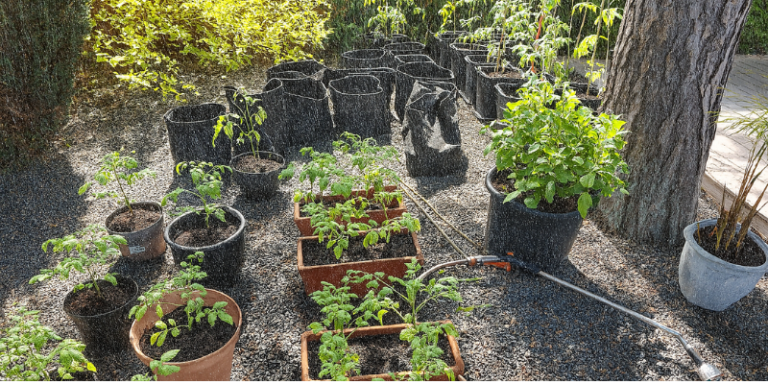
“When it rains, it pours” would describe the summer we have had so far.
And after a strong summer downpour, it’s easy to think your plants have had more than enough water.
After all, rain is nature’s irrigation system.
But from my experience, it is not that straightforward.
Don’t automatically skip watering after a heavy rain. Instead, take a moment to check your soil’s moisture before deciding.
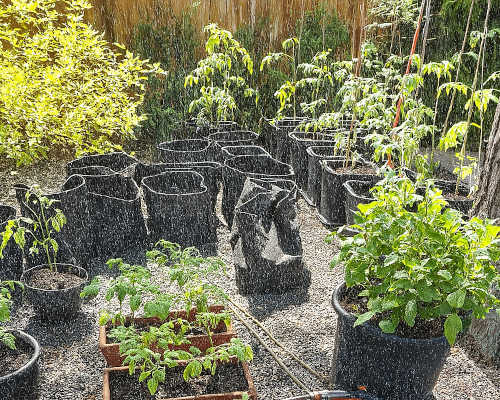
Here’s why that extra step matters — and how it can protect your darlings from stress, disease, and even dead plants.
Why You Might Still Need to Water After Rain
Heavy rain doesn’t always mean your soil is fully hydrated.
Rainfall can vary widely in intensity and effectiveness, and not all of it reaches where it’s needed — the root zone.
1. Water Might Not Soak Deeply Enough
Heavy rain will often saturate the soil, and water may run off the surface before it can soak deeply into the soil. This is especially true for certain soil types:
- Clay soils get hard and compacted, preventing the soil from absorbing water.
- Dry, crusted soil, where water beads off instead of soaking down to the root area.
- Sloped and uneven landscapes, where gravity pulls water away from roots.
So, what looks like a good soaking means that the top inch or 3 cm might be wet, but the root zone, where plants actually absorb water, can still be dry.

2. Pots and Raised Beds Dry Out Faster
Containers and raised beds often have excellent drainage, but they also lose water quickly. If your pots were already dry before the rain, a brief shower may not have been enough to reach all the roots.
And leaves and foliage often cover the soil, and water is simply bouncing off the plants, leaving the soil dry.
The 6-Inch (15 cm) Soil Check: Your Guiding Light
Do not assume; check the soil moisture at a depth of 6 inches (15 cm), which roughly corresponds to the depth of most plant root systems.
How to Check:
- Use a soil probe, trowel, or even your finger if the soil is loose.
- Dig 4–6 inches (10-15 cm) down beside the plant (not directly on the roots).
- The soil should feel cool and moist, but not overly wet or soggy.
- If it’s dry or crumbly, your plant may still be thirsty.
- If it’s wet, hold off watering to avoid root rot.
This small step takes only minutes but gives you an answer, far better than assuming based on surface appearance.
When you have done this check once or twice you will know you garden and the occasional chack will do.
But Are There Any Risks of Overwatering After Rain
Yes, too much water is bad for your plants. And more water is not always better.
Too much moisture — especially on top of an already saturated root zone — can do real damage.

1. Soil Compaction
Heavy rain, especially in areas without good mulch cover, will compact the soil over time.
Compacted soil reduces oxygen flow to the roots and makes it harder for future water to be absorbed.
This is especially problematic for vegetables, herbs, and flowering plants with delicate root systems.
2. Loss of Nutrients (Nutrient Leaching)
Heavy rain can wash vital nutrients out of your garden beds and containers.
Telltale signs include yellowing leaves, stunted growth, and plants that don’t look great, even if they look “well-watered.”
Overwatering immediately after rain can flush away well-needed nutrients.
This is also why you should never water plants after feeding them liquid nutrients. And only water gently if adding compost, worm castings or aged manure.
3. Root Rot and Fungus
Wet, soggy soil creates the perfect environment for fungal infections, mold, and root rot.
And these diseases are unfortunately hard to detect at first and are often fatal to plants.
From my experience, more beginner gardeners lose plants to overwatering than to the occasional light drought.
Container Gardening: Special Considerations
If you’re growing in pots or containers, post-rain watering decisions can be even trickier.
- Check pot drainage: If your containers are sitting on trays or saucers, they may have collected excess water that could drown the roots. Always empty trays or saucers after heavy rain or watering.
- Feel the weight: Wet pots are much heavier than dry ones. If the pot feels light, it probably needs water, even after a rainfall.
- Use moisture meters: For frequent container gardeners, a simple, inexpensive moisture meter can give instant readings and save a lot of guesswork.
When You Should Water After Rain
Once you’ve checked the 6-inch (15 cm) depth and determined the soil is only partially moist, go ahead and water, but be smart about it.
Best Practices:
- Water deeply and slowly to encourage strong root growth.
- Avoid wetting leaves to minimise the risk of fungus and disease.
- Add mulch to hold in moisture and prevent further runoff.

When You Shouldn’t Water After Rain
- If the soil is sticky or puddled, hold off until it dries.
- If you’re seeing yellowing leaves, soft stems, or mushrooms popping up, your soil is too wet. Skip watering and aerate if needed.
- Let nature take its course — healthy plants can survive short periods of dryness better than excess water.
Summary: Let the Soil Tell You
After rainfall, don’t rely on instinct or the weather report.
Dig down and let your soil tell you what your plants need. The 6-inch (15 cm) rule is simple, effective, and it works.
Smart watering is not about how often you water, but how well you water your plants.
Checking moisture levels below the surface and understanding the unique needs of different soils, containers, and plant types will help you avoid root problems, conserve water, and grow healthier plants with bumper yields.
